Paying
Three charges, and two currency conversions nobody bills you for
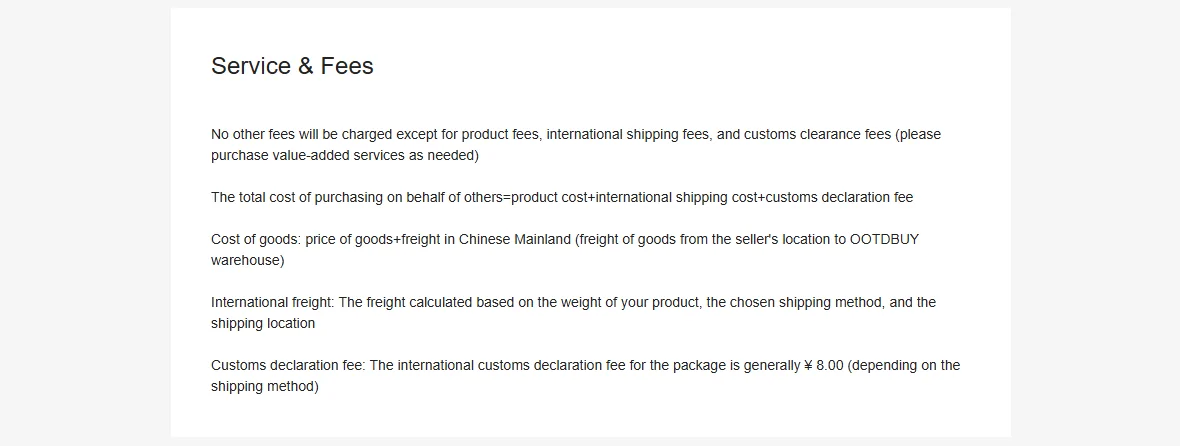
The official fee page is unusually direct. It says no other fees are charged beyond the product cost, the international shipping cost and the customs clearance fee, with paid extras taken only if you buy them. That is a real commitment and it matches what third parties measure.
It is also not the whole picture, because two of the steps between your card and a Chinese seller are currency conversions, and a conversion is a rate rather than a fee.
What the three charges cover
The goods figure is the seller price plus the domestic leg from the seller to the warehouse, which is why an item that looked cheap can arrive at a different number once the seller is in another province.
International freight is calculated on the weight of the parcel, the method chosen and the destination. The declaration fee is put at around 8 CNY depending on the method.
What sits outside all three is duty in your own country, which is decided by your customs rather than by the agent. The official customs page notes that risk alerts appear at order and review time and that lower-risk methods are recommended once goods reach the warehouse, which is a decision the choosing page goes into. Where each charge falls in the ordering sequence is on the ordering page.
The fee page, as published
Short enough to read in full, and worth doing so. The sentence that matters is the first one, because it is a limit the agent puts on itself.
How money gets in, and what it costs to put it there
Orders draw on a wallet balance, so funding the account is a separate step with its own conditions.
Wise
Five currencies are supported: US dollars, pounds, euros, New Zealand dollars and Australian dollars. Each currency has its own recipient details, and the official page asks you to make sure you are using the right ones before sending.
PayPal
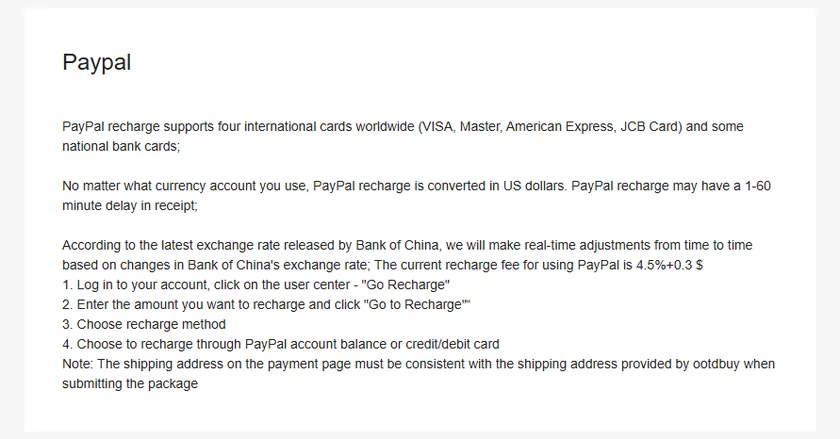
Supports Visa, Mastercard, American Express and JCB along with some national bank cards. Whatever currency your account holds, the top-up is converted in US dollars. The stated fee at the time of reading was 4.5% + $0.30.
Card directly
The official page describes SSL encryption and states that where an unauthorised charge results from using their secure servers, the liability a bank can pass to a cardholder is capped, and that they will cover it up to that cap, provided you report it to your card issuer under its own rules and cooperate with the investigation.
Then the rate
Goods are priced in yuan. The platform states it follows the latest exchange rate published by Bank of China and adjusts in real time as that moves. This is the second conversion, and it is the one nobody sends you a receipt for.
What an outside measurement says
QCRadar publishes a comparison of shopping agents that measures the markup each one applies converting yuan to dollars, alongside service fee, new-user coupons, free storage and a sample US shipping cost. On 2026-10-08 the entry for this agent recorded a service fee of zero and an all-in markup of 12.2 percent, all of it in the currency column.
Read that as a description of the model rather than as a verdict. It says the official claim about fees is accurate, and that the cost of the service is collected at the conversion instead. Both numbers move, and a comparison table is a snapshot: read it at the source before you use it to decide anything.
Where money comes back to
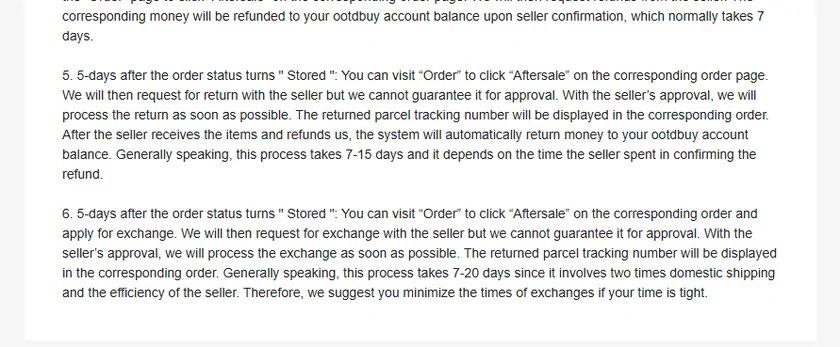
Refunds land in the wallet balance rather than going back to the card. For an order still at pending status, the official aftersales page describes cancelling from the order page with the refund issued immediately to the balance.
That is worth planning around if you are testing the service with one small order. Money that goes in comes back into the account, not into your bank, so topping up an amount you are comfortable leaving in place is a more comfortable first move than funding a large order in one go.